
Today I would like to share a personal experience with team teaching from when I was teaching in a university prep program in Istanbul, Turkey. Although it has been almost six years since this experience, I haven’t seen many examples of it among prep programs since then, so I decided to write this post to share my insights.
I worked in an institution for nine years where we were required to choose a CPD option for our professional development each year. I had already participated in peer observation, mentorship programs, and video observations before 2018, when we were presented with a new option: Team Teaching. I was lucky enough to have a brilliant teaching partner (and best friend) who was eager to do it as much as me and agreed to co-teach with me.
What is Team Teaching?
Team teaching is when two teachers collaborate to instruct in a single classroom at the same time in order to meet the diverse needs of their students. There are six teaching models* to choose from:
One Teach/One Observe: One instructor is primarily responsible for delivering instruction to the entire class. The other instructor is serving as an intentional observer. While observing, this instructor can observe and record student behaviour, student understanding, or even the teaching instructor’s style and behaviour.
One Teach/One Assist: Instructors divide the teaching responsibilities so that one instructor delivers the lesson and the other instructor monitors and assists individual students that may need help.
Station Teaching: Station teaching allows each instructor to work with smaller groups of students. The instructors divide the students into groups and create activities for the students to engage with the lesson material along with the assistance of an instructor. These stations can involve the teaching of new content, reinforcement of previously learned material, or challenging activities for students that are ready.
Parallel Teaching: The instructors divide the class in half. Each instructor works with one of the groups of students, teaching the exact same content. Instructors can decide to divide the group randomly or to divide the class according to readiness level for the lesson or preferred learning style.
Alternative or Differentiated Lesson: One of the instructors teaches the main lesson to the majority of the class. The second instructor works with a small group of students either to provide remedial help or to extend the lesson with more challenging material.
Teaming: Both instructors work together to deliver instruction to the same group of students at the same time.
*Source: https://study.com/learn/lesson/collaborative-teaching-concept-models.html
Steps We Followed

My teaching partner and I decided to go with the Teaming model out of the six options, and we followed these steps during the whole process:
Step 1: We signed a written agreement requiring us to maintain confidentiality during and after the team teaching process.
Step 2: We scheduled a time to teach and determined the team teaching model, related topic/language point, and the unit for the lesson.
Step 3: After a period of self-study and preparation, we worked together to prepare the lesson and shared responsibilities and roles.
Step 4: After teaching the lesson, we met to evaluate our lesson and experience. At this step, we decided to repeat the practice with another class at the same level (B1) because we weren’t quite satisfied with our performance.
Step 5: After the second classroom practice, we wrote our team teaching reflection and submitted it along with our lesson plan and a recording of the lesson for our trainers to review.
Step 6: We had a feedback session with our trainers, who were super supportive throughout the process, and as part of our CPD, we prepared a presentation to share our experience with colleagues.
How did it go?

For our team teaching practice, we chose the Teaming model because we wanted to experience the outcome of teaching with equal responsibilities to the same group of students at the same time. It was going to be a 50-minute lesson and our objective was to have the students learn and practice ‘modals of obligation’ through a listening task activity from our coursebook.
Unfortunately, after our first teaching practice, we weren’t really happy with how well we delivered the lesson because we were both too cautious about not interfering with each other’s teaching time. We thought we couldn’t assist each other well enough to enhance students’ learning, and we didn’t enjoy it much either.
It felt more like delivering a presentation rather than teaching, as we found ourselves performing our parts.
On top of it, listening task came out to be quite difficult for the students. It wasn’t an anticipated problem we discussed during our lesson planning, so we experienced time management issues to overcome this challenge. So at the end of this lesson, there wasn’t sufficient time to practise modals.
However, we were lucky to have another class at the same level with similar strengths and weaknesses. For our second classroom practice, we decided to be more relaxed and not afraid of speaking up and assisting each other as we practised our roles. We were well-prepared for the difficult listening task and ready to deal with other possible issues.
This time, by adopting a more collaborative approach, we were able to complement each other’s roles and create a supportive atmosphere that benefitted our students.
We were more confident and familiar with each other’s teaching behaviours. As a result, we managed to create a positive learning environment, achieve our goal and enjoy the lesson to the fullest.
I’m actually quite happy now that it didn’t go so well on our first attempt. It taught us a lot.
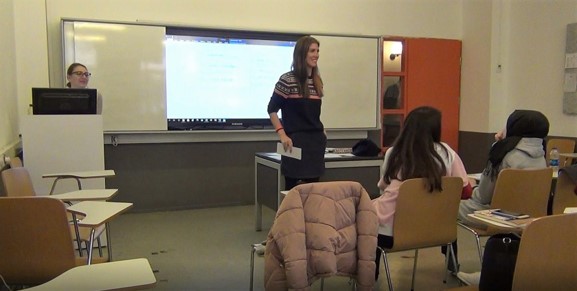

(screen captures from the recording)
Benefits
- Collaborating to instruct the same language point during the same lesson helped us evaluate our own teaching habits.
- It helped us add some new ideas and creative ways of teaching which we hadn’t tried before.
- Students were engaged and interested as they were experiencing an unusual teaching style.
- They were happy to benefit from two experts who supported each other.
- It was energizing and entertaining for both students and us.
Possible Drawbacks
- It requires a lot of planning and preparation, as well as well-established communication and trust between the partners.
- It requires the same level of commitment and modesty. Otherwise, the discomfort and stress between teachers may pass to students.
- It requires careful consideration to not make the other teacher look bad. Otherwise, students will lose respect for both teachers.
Overall Comment
Team teaching is a stimulating experience for both teachers and students. For us, seeing each other’s teaching styles – by not just observing but being a part of it – and learning from each other’s experiences were educational. It offered us the opportunity to criticize and reflect on our own teaching habits.
It is also practical since the responsibility of teaching the subject becomes two people’s job. Some students need extra care and help from teachers. When they are focused on the activity, while a teacher is observing, the other can help the ones who struggle. This will foster students’ learning and make teaching easier and more fruitful.
Ours was not a one-way process. Starting from planning the lesson to writing a reflection, the whole collaborative process became learning itself. Every step taught us something different. By sharing ideas on teaching, we could build up our skills from beginning till the end.
If you haven’t considered team teaching yet, I highly suggest you give it a chance and see how it can benefit you and your students.

I wanted to end this post with our final slide from the presentation. 🙂
Till next time!
Images by rawpixel.com on freepik
 ELT Chalkboard
Leave a comment